Article Overview
The input power of a Raman amplifier is typically low compared to the pump power, and the amplifier gain depends on both the input signal and pump powers, with small-signal gain achieved when the input is weak relative to the pump.
Input Signal Power
In a Raman amplifier, the input signal power (Ps) is the optical power of the light that needs amplification. For most telecom applications, this input is relatively weak, often in the range of -30 dBm to 0 dBm, depending on the system design and fiber length . When the input signal is low, the amplifier operates in the small-signal regime, where the gain is approximately linear and the pump depletion is negligible . As the input power increases, gain saturation occurs because the pump energy is shared among more signal photons, reducing the incremental gain per unit input power .
Pump Power and Its Relation to Input Power
The pump power (Pp) is much higher than the input signal power, typically on the order of 1 W or more for standard telecom fibers . The Raman gain is proportional to the product of the pump power and the effective interaction length of the fiber. The input signal power should be low enough to avoid significant pump depletion if maximum gain is desired, but high enough to maintain a good signal-to-noise ratio (OSNR) . For multi-channel systems, the input power per channel is often around -20 dBm, with the pump power distributed across multiple wavelengths to achieve a flat gain profile .
Practical Considerations
- Fiber length: Longer fibers allow more interaction between pump and signal, reducing the required input signal power for a given gain .
- Co- vs. counter-propagating pump: Co-propagating pumps provide faster response to input power changes but can be more sensitive to input fluctuations, while counter-propagating pumps offer more stable gain .
- Gain saturation: If the input signal is too high, the amplifier enters saturation, reducing the effective gain and potentially increasing nonlinear effects .
- Optimization: System designers often optimize the input signal and pump powers together to achieve the desired gain, flatness, and OSNR, using simulation tools or iterative calculations .
Summary
The input power of a Raman amplifier is generally low relative to the pump, ensuring operation in the small-signal regime for maximum gain. Typical input powers range from -30 dBm to 0 dBm, while pump powers are much higher. The amplifier gain depends on both the input and pump powers, fiber length, and pump configuration, and careful optimization is required to balance gain, noise, and saturation effects .

ASE Noise in Raman Amplifiers: Pump Depletion Impact
Optical signal to noise ratio as a function of pump power at different values of input signal power: a) pump depletion is

Lasers for Raman Spectroscopy
There are lasers which are specifically suitable for application Raman spectroscopy. We discuss the

Optimizing the pump power and frequencies of Raman amplifiers for
In this example, we show that the Gain Flattening type of optimization can be used to design multi-wavelength

What is Raman Amplifier?
Limitations of Raman Amplifier Raman amplifiers also have some limitations. One of the main limitations is that they
Raman amplification key to solving capacity, system-reach demands
End users expect point-and-click Web links to anywhere in the world. Raman amplification can be a key technology to solve both

Raman Amplifiers in Optics: Ultimate Guide
Discover the principles, benefits, and applications of Raman amplifiers in optics, and learn how they revolutionize

Raman Gain – amplification, fiber, amplifier
The Raman gain can be fairly strong in optical fibers, where substantial optical intensities can be
Raman Amplifier Characteristics with Variation of Signal Power and
In this simulation, it required greater pump power because pump power is also transfer its energy to ASE power, and also amplify the
Raman-amplified pump and its use for parametric
Whereas RA-OPC has previously been demonstrated to improve nonlinear crosstalk and conversion efficiency

Improved Physics-based Raman Amplifier Model in C+L Networks
However, the method is based on accurate measurement of Raman pump powers, which can be hard to achieve in real systems.
High performance Raman amplifier: applications in optical
The four-stage configuration achieves the highest performance, with 63 dB gain and 59.9 dBm output power at 600
Enhanced gain Raman amplifiers using different pumping schemes
Raman amplifiers (RAs) ofer several advantages over EDFAs and SOAs, including broadband amplification, lower noise, higher

Raman Amplifier
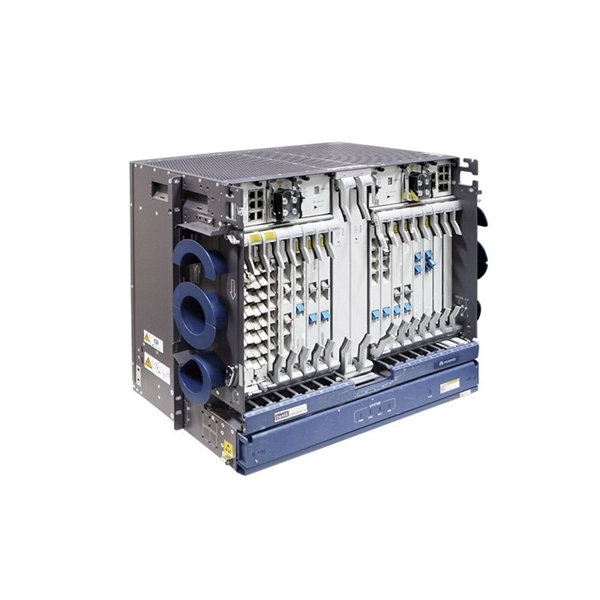
Based on the stimulated Raman scattering (SRS) effect, a Raman amplifier uses a transmission fiber as the gain medium to transfer
Raman Amplifier
Raman Amplifier Working Mechanism of Raman Amplification Based on the stimulated Raman scattering (SRS) effect, a Raman

Raman Amplification
Indeed, in Eq. 4.21, the amplifier signal input power is then increased by the extra distributed gain offered by Raman amplification.

Simulation and experimental validation of gain saturation in Raman
On the other hand, the average power Raman amplifier model exhibits constant Raman gain with the input signal power

(PDF) Average Power Model of Optical Raman Amplifiers Based on
The study presents the average power model of optical Raman fiber amplifiers based on frequency spacing and

Enhanced gain Raman amplifiers using different pumping schemes
Several studies have been conducted on the use of single-stage and multistage Raman amplifiers with various pump
What is a Raman Amplifier?
Despite their advantages, Raman amplifiers also face certain challenges and limitations. One of the primary concerns is the

Raman Amplifier
When using a different wavelength, pump power can be increased, and bandwidth is enlarged as well. By adjusting the ratio of these
Raman net gain as a function of the input pump power at various
Raman net gain as a function of the input pump power at various waveguides of (W = 350, 450 and 1000) nm, a) Strip waveguides.

Raman Amplification Optimization in Short-Reach High Data Rate
For a short-reach metro network or DCI application with high-data-rate transceivers, the distributed Raman amplifier delivered the
Gain and Noise Performance of Fiber Raman Amplifiers
Stimulated Raman Scattering. Noise figure versus on-off Raman Gain for a 100km fiber varying input pump power
100 nm bandwidth flat-gain Raman amplifier – Average power model
The above referenced experimental paper shows the possibility to perform gain-equalized Raman gain over 100 nm

High performance Raman amplifier: applications in optical
High-performance Raman Amplifiers (RAs) have emerged as a powerful solution for enhancing signal strength and

Raman amplification
For submarine applications, Raman amplification minimizes the number of underwater repeaters, enhancing reliability and cost

An ultra-high gain and efficient amplifier based on Raman
Raman amplification arising from the excitation of a density echelon in plasma could lead to amplifiers that significantly exceed

Raman gain efficiency as a function of different pump power and input
Raman gain efficiency as a function of different pump power and input signal power. Here, the up-triangles and down-triangles