Arrayed waveguide gratings (AWG) are commonly used as optical (de)multiplexers in wavelength division multiplexed (WDM) systems. A grating with a diffraction order of 20 has been fabricated using a composite glass waveguide. It is usually built as part of a planar lightwave circuit (photonic integrated circuit), where the light coming from an input fiber first enters a multimode. g and dispersive properties. AWGs were first reported by Smit (1988) and later by. This application note describes how to design, simulate and layout an Arrayed Waveguide Grating (AWG) using OlympIOs.
[pdf] Following are the drawbacks of using Fiber Optic Sensors: High Cost: They are very expensive. Complex Detection Systems: Detection systems can be complex. Requires Training: Users may be unfamiliar with the technology, requiring basic training before use. Advantages include immunity to electromagnetic interference and high sensitivity, while disadvantages include installation complexity and higher initial costs. A sensor is a device that measures a physical quantity and converts it into a signal that can be measured by an instrument or read by a. The usage of fiber‐optic sensors has flourished in many fields over the past 30 years due to the fiber‐optic's inherent advantages: cost‐effectiveness, miniaturized size, light weight, and immunity to electromagnetic interference. However, the current literature contains.
[pdf] A fiber Bragg grating (FBG) displacement sensor based on synchronous sensing is developed for real-time monitoring of a tunnel lining. This paper aims to achieve real-time monitoring of the excavation stability of the lining structure by integrating two monitoring technologies: structural deformation monitoring and fiber grating strain monitoring. The sensing principle and mechanical structure of the proposed sensor are analyzed and simulated, and its sensitization effectiveness and temperature compensation. "Distributed Fiber Optic Monitoring Systems in Tunneling: Implementation from Research into Practice. " Paper presented at the 15th ISRM Congress, Salzburg, Austria, October 2023. With the rapid development of China's.
[pdf] The structure of the FBG can vary via the refractive index, or the grating period. The grating period can be uniform or graded, and either localised or distributed in a superstructure. The refractive index has two primary characteristics, the refractive index profile, and the offset. Typically, the refractive index profile can be uniform or apodized, and the refractive index offset is positive or zero. There are six common structures for FBGs;.
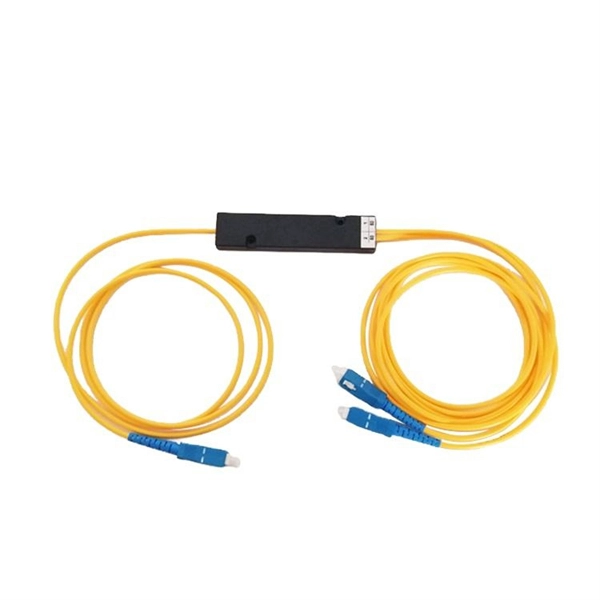
[pdf] A WDM system uses a at the to join the several signals together and a at the to split them apart. With the right type of fiber, it is possible to have a device that does both simultaneously and can function as an. The optical filtering devices used have conventionally been (stable solid-state single-frequency in the form of.
[pdf]