The EDCP is a storage facility for energy data & information generated and used by both the government and private sectors involved in energy exploration and development in the Philippines. The center has more than 120,000 analog and about 15,000 digital data holdings. The Philippines should synchronize its energy and digital infrastructure planning to prevent surging data center demand from overwhelming the national power grid, the Institute for Climate and Sustainable Cities (ICSC) said Monday. All content is in the public domain unless otherwise stated. ETP aims. In a low-income community in the Manila suburb of Fairview, a large rectangular structure is rising near a busy highway clogged with vehicles, commuters, and commerce.
[pdf] A high-density data center is one where power per rack sits well above the usual range. AI and high-performance computing (HPC) often push this to tens of kilowatts, with training peaks approaching or exceeding 100 kW. As demand for faster processing, greater storage, and improved efficiency rises at a rate never before seen because of the surge in AI, these advanced. At the intersection of escalating data demands and finite space, a high-density data center stands tall—but what is a high-density data center exactly? It's a modern hub designed to maximize computing power in a compact footprint, balancing high energy consumption and efficient cooling.
[pdf] This study proposes the container data center with the featured cold aisle containment (CAC) as effective thermal control strategy. In design, the overhead downward flow system is implemented with a he.
[pdf] While most IT environments use 19-inch racks, a few alternative formats exist: 23-inch racks – Found in certain telecom installations. OCP Open Rack (21-inch) – Used in hyperscale data centers with custom. Understanding server rack sizes is essential for data centers, enterprise IT teams, and businesses deploying high-performance infrastructure. The right rack dimensions ensure optimal equipment compatibility, airflow efficiency, cable management, and long-term scalability. This guide dives. Whether you're building a home lab or a data center, rack size directly affects how well your servers fit, how cool they stay, how neat your cables run, and how much future growth you can handle.
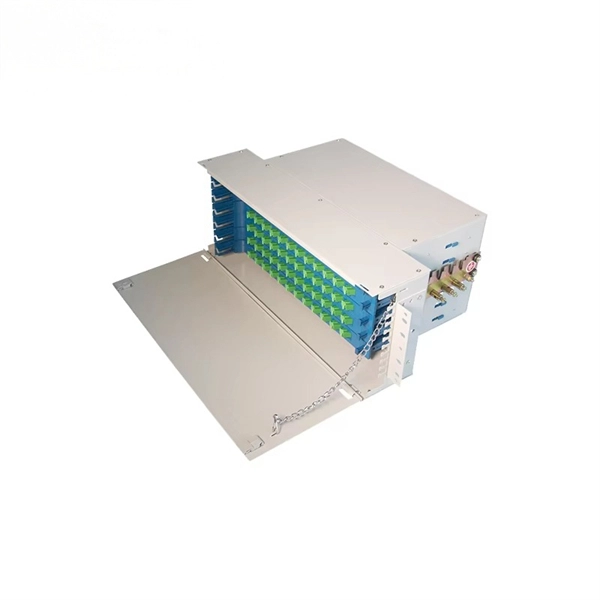
[pdf] Both rack-mount and wall-mount fiber patch panels organize and protect your network connections, but they're designed for different environments. The main difference comes down to space, capacity, and accessibility. It acts as a hub for organizing splices and patch cords, streamlining fiber management and preserving signal integrity. They typically come in 1U, 2U, or higher configurations, depending on the number of fiber ports they support. These patch panels are most commonly used in data centers, telecom rooms, and large-scale network. When building or upgrading a fiber network, choosing between rack-mount and wall-mount patch panels can have a big impact on performance, organization, and scalability.
[pdf]